Buying Guide · 13 min read
Buying Off-Plan Property on the Costa Blanca: The Complete Guide
29 May 2026 · Hansson & Hertzell
Off-plan purchases offer new-build quality, developer pricing, and staged payments — but carry risks that resale properties do not. Here is everything you need to know before signing.
Buying off-plan means purchasing a property that has not yet been built — or is under construction — based on plans, renders, and a show home. You pay a reservation deposit, then staged payments during construction, and the balance on completion when you receive the keys.
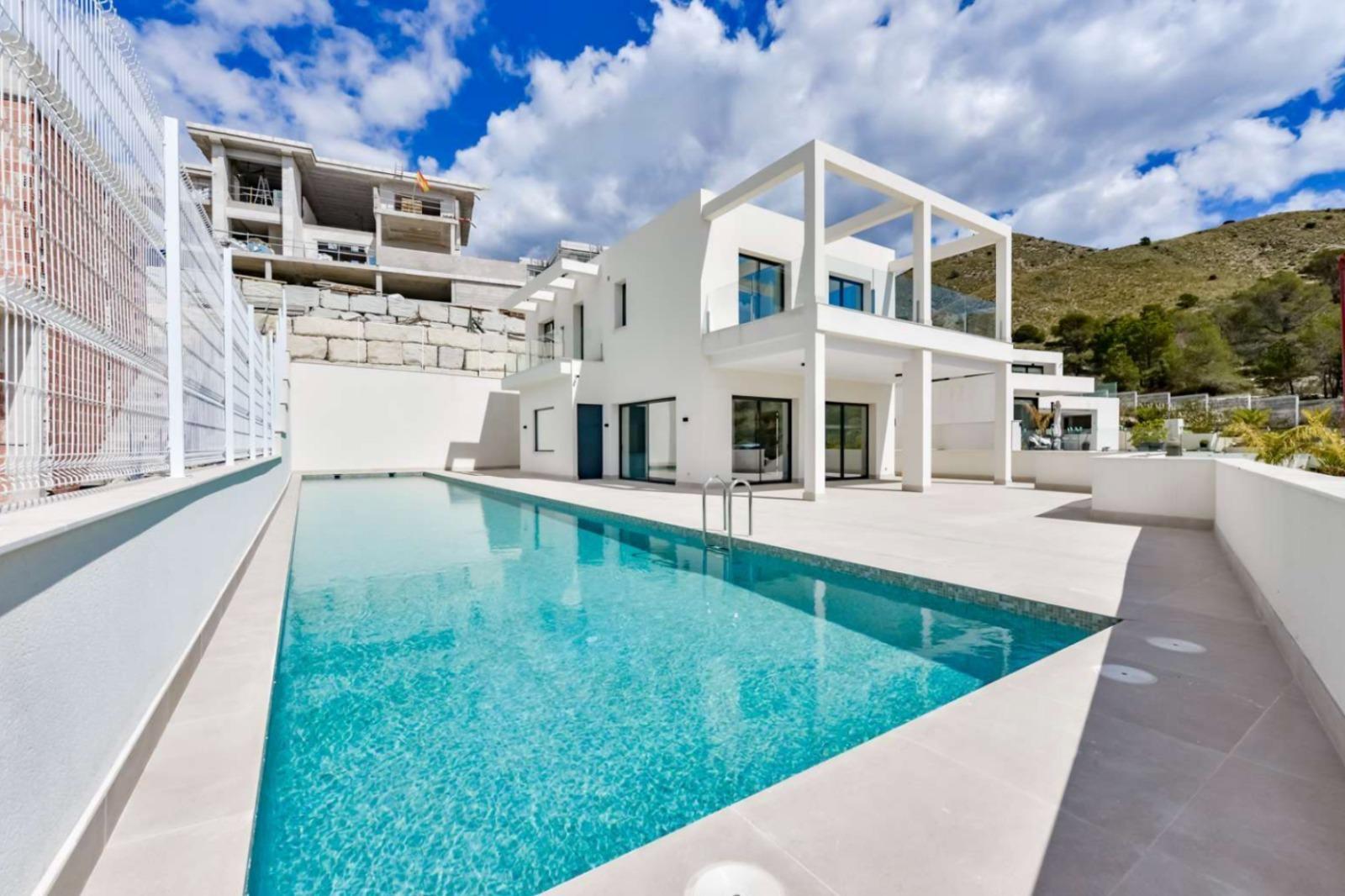
On the Costa Blanca, the majority of new residential developments are sold off-plan. Developers in Jávea, Moraira, Benidorm, Torrevieja, and Orihuela Costa sell units before construction begins — sometimes before a single brick is laid. This is standard practice, not unusual.
The Appeal of Off-Plan Buying
Pricing: Off-plan units are typically priced lower than equivalent completed properties. Developers need cash flow during construction and offer early-buyer pricing. As development progresses, prices increase — buyers who purchase at launch often see paper gains by the time construction completes.
New-build quality: Modern specifications — energy-efficient construction (CEE rating), air conditioning pre-installed, underfloor heating options, double glazing, solar panels, private pools, underground parking. No renovation required. No hidden maintenance backlog.
Customisation: Early buyers can often choose finishes — floor tiles, kitchen units, bathroom fittings, and sometimes internal layout changes. This is a significant advantage over resale where you inherit previous owners' choices.
Staged payments: The payment schedule spreads your financial commitment over the construction period — typically 18–36 months. This allows buyers who could not otherwise purchase outright to plan their finances without needing the full amount at once.
Capital appreciation: If the market rises during the construction period (which it has done consistently on the Costa Blanca since 2015), you benefit. Buyers who purchased off-plan in 2021–2022 for delivery in 2023–2024 saw significant gains.
The Risks You Must Understand
Off-plan carries real risks that resale properties do not. Going in eyes open is essential.
Developer insolvency: If the developer runs into financial difficulty and cannot complete the project, you could lose your stage payments. This happened widely in Spain during the 2008–2012 crisis. The laws have changed significantly since — but the risk is not zero.
Construction delays: The contractual completion date is often aspirational. Delays of 6–18 months are common. This affects your personal planning, mortgage commitments, and the costs you bear in the meantime.
What you see is not what you get: Renders and show homes are marketing tools. The finished product may differ in materials, finishes, views (if surrounding buildings are erected), and quality of construction. Visit the actual site and the developer's completed projects before committing.
Market risk: If the market falls during the construction period, you may complete on a property worth less than you paid. This is unlikely given current Costa Blanca dynamics but is a theoretical risk for any asset purchase.
Legal Protections in Spain (Post-2015)
Spanish law was significantly tightened after the 2008 property crisis. Key protections now apply to off-plan purchases:
Bank guarantee: Developers selling off-plan are legally required to hold all stage payments in a ring-fenced account, with a bank guarantee covering the return of all payments if the developer fails to complete or obtain the first occupancy licence (licencia de primera ocupación).
Insurance: Developer's insurance must cover stage payments until completion.
The bank guarantee is only valuable if you actually obtain one: Your lawyer must secure the individual bank guarantee or insurance policy for your specific property. Do not rely on the developer's word that "the guarantees are in place." Insist on the documentation.
Licencia de primera ocupación: The developer must obtain this licence before handing over the keys. This confirms the property is legally habitable and built according to plan. Completion before this licence is granted is illegal and creates serious complications.
How to Assess a Developer
The most important single factor in an off-plan purchase is the developer's track record and financial standing. Assess:
- Completed projects: Visit finished developments by the same developer. Speak to owners if possible. Check the quality of construction, communal areas, and whether guarantees were honoured.
- Financial standing: A publicly listed developer or one backed by a large bank is lower risk than a small local company. Ask your lawyer to conduct a financial check on the developer (registro mercantil search).
- Legal status of the land: The land on which the development is planned should have a building permit in place, or the developer should confirm it is imminent. Building on land without the correct planning permission creates serious problems.
- Reputation: Search for news articles, forum posts, and reviews. The Costa Blanca expatriate community is vocal about developer issues.
The Payment Structure
A typical off-plan payment schedule:
- Reservation deposit: €3,000–€6,000 to take the unit off the market while contracts are drafted (usually refundable within a short window)
- Private purchase contract (contrato privado de compraventa): 10–20% of the purchase price, paid within 2–4 weeks of reservation
- Stage payments during construction: 10–30% paid in 1–3 tranches as construction milestones are reached (foundation, structure, roof, completion)
- Balance on completion (key handover): The remaining amount (typically 50–70%), paid via your Spanish bank or mortgage at the notary
All stage payments must be covered by the bank guarantee. Keep your payment receipts and guarantee documents safe.
Mortgage Considerations for Off-Plan
Getting a mortgage for an off-plan property is slightly more complex than for a resale. Spanish banks generally:
- Require the mortgage offer to be renewed or confirmed closer to completion (original offers often expire)
- Lend based on the lower of purchase price or bank valuation (tasación) — valuations at the time of completion may differ from at-purchase
- Have different processes for stage payment mortgages (hipoteca autopromotor) versus standard mortgages
If you plan to use a mortgage, confirm with your bank that they will lend on the specific development before you commit. Get this in writing.
The Contract: What to Check
Your Spanish property lawyer must review the purchase contract (contrato privado de compraventa) before you sign. Key clauses to check:
- Completion date and penalties for delay: What happens if the developer is late? Is there a compensation clause? Can you exit if delays exceed a certain period?
- Force majeure definitions: Overly broad force majeure clauses can excuse developers from almost any delay. Push back on these.
- Specification changes: Can the developer change the specification without your consent? There should be a clause protecting you from material changes.
- Bank guarantee details: The contract should specify how and when your bank guarantee is provided.
- Cancellation rights: Under what circumstances can you cancel, and what happens to your payments?
- VAT and tax obligations: New builds attract 10% IVA (VAT) plus 1.5% stamp duty (AJD). Confirm these are specified and who is responsible.
Do not sign anything without your independent lawyer having reviewed it. Developer lawyers work for the developer.
Practical Tips for Off-Plan Buyers
- Visit the site before signing: See the actual plot, the views, the surrounding development, and the neighbourhood.
- Visit a completed project by the same developer: This is the most reliable quality check available.
- Secure the bank guarantee immediately: Do not pay any stage payment without the individual guarantee document in your hands.
- Budget for delays: Plan your living arrangements and finances assuming the project is 6–12 months later than stated.
- Register your interest early: The best units and prices go first. In popular developments on the Costa Blanca, launches sell out within days.
- Use your own lawyer: Never use the developer's recommended solicitor — they represent the developer's interests, not yours.


